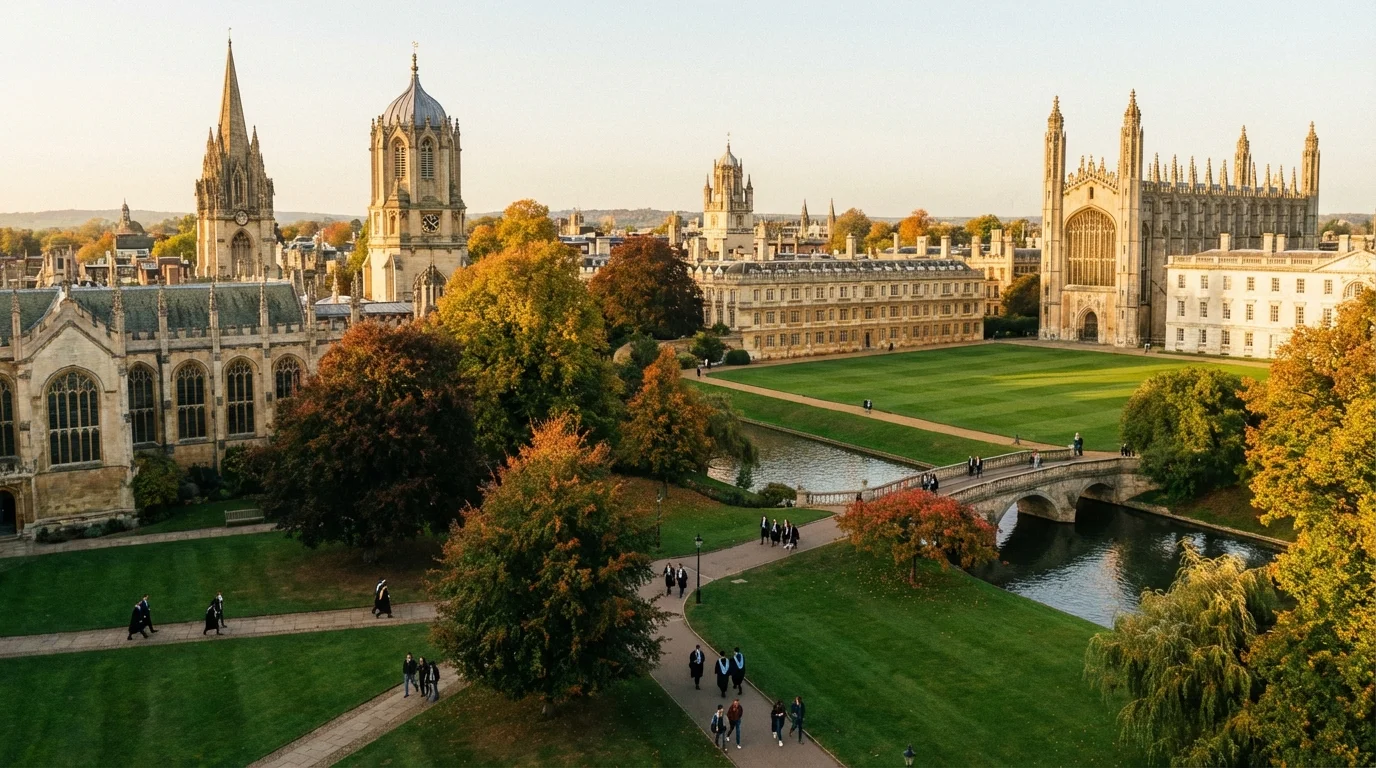
The United Kingdom continues to be one of the world’s most popular study destinations for international students. With world-renowned universities, rich cultural heritage, and strong post-study work opportunities, the UK offers an exceptional educational experience. This comprehensive guide covers everything you need to know about studying in the UK in 2026.
Why Study in the UK?
World-Class Education
The UK is home to some of the world’s oldest and most prestigious universities. Four UK universities consistently rank in the global top 10: Oxford, Cambridge, Imperial College London, and UCL. The UK’s rigorous academic standards and research excellence attract students from over 180 countries.
Shorter Degree Programs
One of the UK’s biggest advantages is the efficiency of its degree programs:
| Program Level | UK Duration | US Duration |
|---|---|---|
| Bachelor’s Degree | 3 years | 4 years |
| Master’s Degree | 1 year | 2 years |
| PhD | 3-4 years | 5-7 years |
This means you can enter the workforce earlier while saving on tuition and living costs.
English Language Environment
As a native English-speaking country, the UK provides full immersion in the language, benefiting both your academic and professional future. Even if English isn’t your first language, you’ll graduate with excellent proficiency.
Post-Study Work Opportunities
The Graduate Route visa allows international students to stay and work in the UK for 2 years after completing a bachelor’s or master’s degree (3 years for PhD graduates), with no job offer required.
Top Universities in the UK
Russell Group Universities
The Russell Group represents 24 leading UK research universities, similar to the Ivy League in the US. Key members include:
University of Oxford
- QS World Ranking: #3
- Notable for: Humanities, Sciences, Medicine
- Famous alumni: 28 British Prime Ministers
University of Cambridge
- QS World Ranking: #5
- Notable for: Sciences, Mathematics, Engineering
- Famous alumni: 121 Nobel laureates
Imperial College London
- QS World Ranking: #6
- Notable for: Engineering, Medicine, Business
- Strong industry connections
University College London (UCL)
- QS World Ranking: #9
- Notable for: Architecture, Law, Medicine
- London’s largest university
London School of Economics (LSE)
- QS World Ranking: #45
- Notable for: Economics, Politics, Law
- Strongest for social sciences
Other Excellent Options
Don’t overlook other outstanding institutions:
- University of Edinburgh - Scotland’s premier university
- University of Manchester - Research powerhouse
- King’s College London - Medical sciences leader
- University of Bristol - Engineering excellence
- University of Warwick - Business school reputation
Entry Requirements
Academic Requirements
Requirements vary by university and program, but general guidelines include:
Undergraduate:
- A-Levels: AAA-BBB depending on university ranking
- IB Diploma: 36-42 points for top universities
- High school diploma with strong GPA (3.0+ for most programs)
Postgraduate:
- Bachelor’s degree with 2:1 (Upper Second Class) or equivalent
- Relevant work experience for MBA/professional programs
- Research proposal for PhD applications
English Language Requirements
| Test | Undergraduate | Postgraduate |
|---|---|---|
| IELTS Academic | 6.0-7.0 | 6.5-7.5 |
| TOEFL iBT | 80-100 | 90-110 |
| Cambridge English | C1 Advanced | C1/C2 |
| Duolingo | 105-120 | 115-130 |
Requirements vary by institution and program. Check specific university requirements.
Foundation Year Programs
If your qualifications don’t meet direct entry requirements, foundation year programs offer an excellent pathway. These 1-year programs prepare international students for undergraduate study through:
- Academic English development
- Subject-specific preparation
- Study skills training
- Cultural adaptation support
Major pathway providers include INTO, Kaplan, Study Group, and Navitas, operating in partnership with leading UK universities.
UK Student Visa (2026)
Student Visa Overview
To study in the UK for more than 6 months, you’ll need a Student Visa (formerly Tier 4). Key requirements include:
- Confirmation of Acceptance for Studies (CAS) from a licensed sponsor
- Proof of funds - tuition fees + £1,334/month (London) or £1,023/month (outside London) for up to 9 months
- English language proficiency - usually proven through your CAS
- Valid passport
Application Timeline
| Step | When to Complete |
|---|---|
| Receive CAS | After accepting offer |
| Apply for visa | Up to 6 months before course starts |
| Visa decision | Within 3 weeks (standard) |
| Travel to UK | Up to 1 month before course (degree programs) |
Visa Costs (2026)
- Application fee: £490
- Immigration Health Surcharge (IHS): £776 per year
- Priority processing (optional): £500
Working While Studying
Student visa holders can work:
- Up to 20 hours/week during term time
- Full-time during official vacation periods
- No limit on university campus work
Cost of Studying in the UK
Tuition Fees
International student fees vary significantly by institution and program:
| Program Type | Annual Fee Range |
|---|---|
| Foundation Year | £15,000-22,000 |
| Undergraduate (Humanities) | £15,000-25,000 |
| Undergraduate (Sciences) | £18,000-30,000 |
| Undergraduate (Medicine) | £30,000-55,000 |
| Master’s (Taught) | £15,000-35,000 |
| MBA | £25,000-90,000 |
| PhD | £18,000-25,000 |
Living Costs
Monthly living expenses depend heavily on location:
| City | Monthly Cost |
|---|---|
| London | £1,500-2,500 |
| Edinburgh | £1,200-1,800 |
| Manchester | £1,000-1,500 |
| Birmingham | £900-1,400 |
| Cardiff | £800-1,200 |
Budget breakdown (outside London):
- Accommodation: £500-800
- Food: £200-300
- Transport: £50-100
- Utilities & Internet: £100-150
- Entertainment: £100-200
Scholarships for International Students
Government Scholarships
Chevening Scholarships
- Full funding for 1-year master’s programs
- Covers tuition, living expenses, flights
- Highly competitive (1.5% acceptance rate)
- Deadline: Usually November
Commonwealth Scholarships
- For students from Commonwealth countries
- Covers tuition, living allowance, airfare
- Requires government/university nomination
GREAT Scholarships
- Partial scholarships (£10,000+)
- For specific countries and universities
- Various deadlines throughout the year
University Scholarships
Most UK universities offer international scholarships:
- Oxford: Clarendon Scholarships - Full funding for graduate study
- Cambridge: Gates Cambridge Scholarships - Full funding for any graduate program
- Imperial: President’s Scholarships - £15,000-25,000 for PhD students
- Edinburgh: Edinburgh Global Scholarships - £3,000-10,000
Tips for Scholarship Success
- Start searching early (12-18 months before enrollment)
- Apply to multiple scholarships
- Tailor each application to scholarship criteria
- Get strong recommendation letters
- Demonstrate leadership and community involvement
Application Timeline for 2026 Entry
Undergraduate (UCAS)
| Date | Action |
|---|---|
| September 2025 | UCAS opens for applications |
| October 15, 2025 | Deadline for Oxford, Cambridge, Medicine |
| January 31, 2026 | Main UCAS deadline |
| February-May 2026 | Receive decisions |
| June 2026 | Reply deadline (Firm & Insurance choices) |
| August 2026 | A-Level results & Clearing opens |
Postgraduate
Most UK universities accept applications on a rolling basis. Recommended timeline:
| Month | Action |
|---|---|
| September-November | Research programs, prepare documents |
| December-February | Submit applications |
| January-April | Receive offers |
| May-June | Accept offer, apply for accommodation |
| June-August | Apply for visa |
Competitive programs (Oxford MBA, LSE Finance) may have earlier deadlines.
Preparing for Life in the UK
What to Pack
Essential Documents:
- Passport and visa documents
- University acceptance letter
- Accommodation confirmation
- Bank statements
- Travel insurance
Clothing:
- Waterproof jacket (essential!)
- Layers for unpredictable weather
- Warm coat for winter
- Comfortable walking shoes
Opening a Bank Account
UK banks for international students:
- Monzo (no proof of address needed)
- Starling Bank (app-based, fast setup)
- Barclays (traditional, campus presence)
- HSBC (international transfers)
You’ll need: Passport, BRP, proof of enrollment, proof of address
Healthcare
The Immigration Health Surcharge gives you access to the National Health Service (NHS), which provides:
- Free GP appointments
- Free hospital treatment
- Subsidized prescriptions (£9.90 in England, free in Scotland/Wales)
Register with a local GP within your first week.
Key Takeaways
- Start early - Begin research 12-18 months before intended enrollment
- Consider pathway programs if you don’t meet direct entry requirements
- Budget carefully - Factor in tuition, living costs, and visa fees
- Apply for scholarships - Many opportunities exist but competition is fierce
- Prepare for the weather - Pack layers and waterproofs
- Embrace the experience - Join societies, travel, and make the most of your time
Next Steps
Ready to begin your UK study journey? Here’s what to do:
- Explore UK universities in our school directory
- Check program requirements using our admission calculator
- Compare costs with our cost calculator
- Get personalized guidance through our contact form
This guide is updated regularly. Last updated: January 2026.
Have questions? Chat with our AI advisor or contact us directly for personalized guidance.


